

Analyzing a company's customer base is critical for understanding its revenue stability and growth potential. It helps identify risks, like over-reliance on key clients, and opportunities, such as untapped market segments. Here's a quick overview of what to focus on:
- Customer Segmentation: Break customers into groups by location, industry, or spending habits to uncover trends.
- Concentration Risks: Check if too much revenue depends on a few clients or industries.
- Retention vs. Churn: High churn rates may signal customer dissatisfaction.
- Key Metrics: Use Customer Lifetime Value (CLV), Average Revenue Per User (ARPU), and Customer Acquisition Cost (CAC) to measure customer health.
- Feedback Analysis: Customer feedback reveals satisfaction levels and potential issues.
Understanding these factors ensures smarter investment decisions by highlighting both risks and growth opportunities. Ready to dive into the details? Let’s break it down step by step.
Essential Steps for Business Acquisition Due Diligence
Steps to Analyze a Customer Base
Understanding a customer base is key to assessing revenue stability and identifying growth opportunities. Here's how to approach this analysis step by step.
Breaking Down the Customer Base into Segments
Divide your customers into segments to get a clearer view of market reach and revenue trends. The RFM (Recency, Frequency, Monetary) analysis is a popular way to pinpoint high-value customers and their purchasing habits.
Common ways to segment customers include:
- Industry verticals
- Geographic locations
- Purchase patterns
- Revenue contributions
After creating these segments, analyze their revenue impact to spot any risks tied to over-reliance on specific groups.
Checking for Customer Concentration Risks
A well-balanced customer base spreads revenue across multiple clients. To evaluate this, focus on:
- Revenue share from top customers
- Contract terms and renewal conditions
- Relationship history with key accounts
- Dependence on specific industries
This helps identify whether the business relies too heavily on a small group of clients, which could pose a risk.
Looking at Retention and Churn Rates
Retention and churn metrics provide insight into customer loyalty and satisfaction. Examining these trends helps gauge the business's long-term health.
| Metric | What It Measures | Why It Matters |
|---|---|---|
| Customer Lifetime Value (CLV) | Expected revenue from a customer | Indicates revenue stability |
| Customer Acquisition Cost (CAC) | Cost to bring in new customers | Reflects marketing efficiency |
| Churn Rate | Percentage of customers lost over time | Highlights customer satisfaction |
High churn rates can point to underlying issues that might threaten future growth.
sbb-itb-cce425d
Tools and Techniques for Customer Analysis
Using Financial Metrics to Measure Customer Value
Financial metrics offer clear insights into customer relationships during due diligence. Take Customer Lifetime Value (CLV), for example. It estimates the total revenue a customer will generate, calculated as Average Revenue × Customer Lifespan. If a customer spends $100 per month over 5 years, their CLV is $6,000. Another key metric is Average Revenue Per User (ARPU), which is calculated as Total Revenue ÷ Active Customers. This helps track spending habits and uncover growth potential.
These metrics help buyers gauge revenue consistency and identify areas for growth. While they provide a solid overview, technology can dig deeper into customer behavior and trends.
Using Technology to Analyze Customer Data
Technology makes customer analysis much easier during due diligence. Tools like CRM systems can reveal:
- Purchase history and patterns
- Customer interaction logs
- Sales pipeline progress
- Customer service records
Advanced analytics and AI can uncover trends that manual reviews might miss. These tools not only predict future customer behavior but also flag potential risks or opportunities. Additionally, examining customer sentiment through feedback adds a qualitative layer to understanding customer relationships.
Reviewing Customer Feedback
Customer feedback provides a unique perspective during due diligence, often highlighting risks or strengths that financial data might overlook. Feedback can be gathered through:
- Quantitative metrics, like satisfaction scores or Net Promoter Score (NPS)
- Qualitative insights, such as comments or support tickets
Analyzing this feedback - especially from top-tier customers - can uncover recurring themes and pinpoint areas affecting business stability. These insights are crucial for assessing satisfaction levels and anticipating potential challenges that might impact future performance.
Using Customer Analysis to Make Better Decisions
Matching Customer Insights to Business Goals
Customer analysis plays a key role in aligning acquisition strategies with overall business objectives. By leveraging segmentation data and performance metrics, businesses can evaluate whether their current customer base supports growth plans. Metrics such as Customer Lifetime Value (CLV) and market penetration can shed light on untapped opportunities and gauge the ability of the customer base to drive sustained growth.
Spotting Risks and Opportunities
Analyzing customer data helps uncover risks like over-reliance on a few key clients or low retention rates, both of which can threaten revenue stability. Addressing these challenges - whether through diversification efforts or improved customer success strategies - can create a more stable foundation for growth.
| Risk Factor | Impact and Mitigation |
|---|---|
| High Customer Concentration | Revenue risks if major clients leave. Mitigation: Focus on diversifying the client base. |
| Low Retention Rates | Leads to irregular revenue streams. Mitigation: Invest in customer success initiatives. |
| Regulatory Compliance Issues | Potential legal or financial risks. Mitigation: Conduct thorough compliance checks. |
On the flip side, customer analysis can uncover opportunities like cross-selling within existing segments, expanding into new regions, or addressing unmet needs with new products or services. While identifying risks is essential, tapping into external expertise can make addressing them more efficient and effective.
Getting Help from External Resources
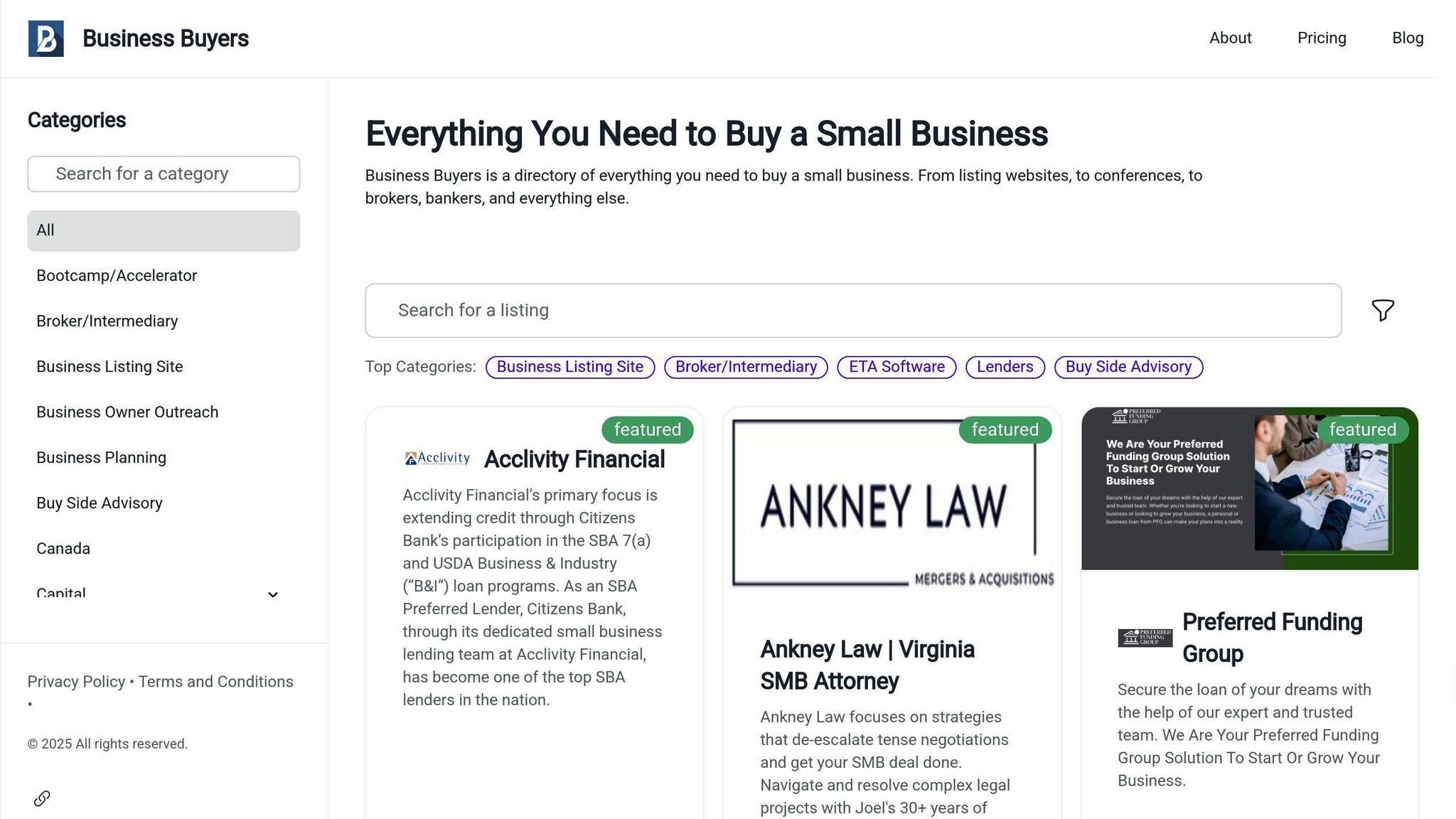
Platforms like Business Buyers offer tools and resources to simplify customer analysis during due diligence. Partnering with external experts can validate your findings and provide deeper insights into customer behavior, satisfaction, and contract trends. This well-rounded approach ensures that customer insights directly guide smarter investment decisions.
Conclusion: The Importance of Customer Base Analysis
Key Takeaways About Customer Analysis
Analyzing your customer base is a critical part of due diligence. It helps assess factors that influence a business's long-term stability using both numbers and customer insights.
| Analysis Component | Key Considerations | Business Impact |
|---|---|---|
| Customer Segmentation | Demographics, behavior | Identifying growth areas |
| Concentration Risk | Revenue distribution | Ensuring business stability |
| Customer Health | Retention rates, satisfaction | Supporting steady revenue |
These findings guide the next steps in evaluating and strengthening a business.
Next Steps for Business Buyers
Conducting a Customer-Base Audit (CBA) is a practical way to gain a clear picture of customer trends and revenue patterns. External tools and resources can simplify this process and provide deeper insights.
Platforms like Business Buyers offer solutions to streamline due diligence, helping you connect customer data with business objectives. Use these tools to uncover growth areas and make informed acquisition choices.